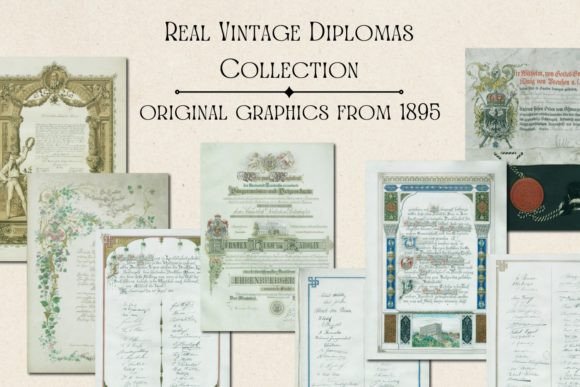
Antique Handwritten Diplomas: Vintage Art for Modern Design
There's a unique magic in holding a piece of history, especially one as personal and celebratory as a diploma. For graphic designers and creators, these artifacts aren't just nostalgic—they're a treasure trove of visual inspiration. A wonderful collection of real, vintage diplomas from 1895 offers an unparalleled opportunity to infuse projects with authenticity and timeless elegance. These aren't mere reproductions; they are meticulously scanned, high-resolution graphics sourced from the National Polish Digital Library, presenting handpainted details and stunning handwritten texts that are impossible to replicate digitally from scratch.
Beyond Nostalgia: The Design Value of Authentic Typography
In an era saturated with sleek, minimalist digital fonts, the organic flow of authentic calligraphy and hand-lettering creates a powerful visual hierarchy. Antique handwritten diplomas provide more than just a vintage aesthetic; they offer a masterclass in composition, ornamentation, and the art of formal presentation. Each flourished letter and carefully ruled line tells a story, adding a layer of narrative and emotional resonance to any design. This kind of visual texture is invaluable for creating standout branding, editorial layouts, and packaging that demands a second look.
Practical Applications for Creative Professionals
The versatility of these high-quality PNG files extends across numerous creative domains. Consider how they can elevate your work:
- Branding & Logo Design: Extract ornate borders, initials, or decorative elements to create unique logo marks or brand patterns for heritage brands, law firms, educational institutions, or artisanal products.
- Marketing & Social Media: Use full diplomas or cropped details as compelling backgrounds for social media graphics, email headers, or campaign posters, instantly adding credibility and a story-driven aesthetic.
- Editorial & Packaging Design: Integrate them as chapter openers, certificate-style coupons, or label designs for gourmet goods, whiskey, or cosmetics, where a sense of tradition and craftsmanship is key.
- Digital Products & Web Design: Create exclusive digital downloads, website banners, or UI elements for apps and platforms focused on history, education, or luxury goods.
Integrating Vintage Assets into a Modern Workflow
To effectively use such distinct elements, thoughtful integration is crucial. Start by analyzing the diploma's inherent color palette—often sepia, ivory, and deep blues or reds—and use it to inform your project's scheme. The intricate details demand a strong visual hierarchy; pair the elaborate script with clean, modern sans-serif fonts to ensure readability and prevent visual clutter. Always consider your audience's expectations; this style resonates powerfully with markets valuing tradition, authenticity, and premium quality.
When selecting assets, prioritize scalability and resolution. The provided 300 dpi scans at A4 format ensure crisp results whether scaled down for a business card or printed as a large-format poster. Evaluate the composition for usable fragments—a single beautiful signature, a wax seal graphic, or an ornate corner can become a standalone design asset.
Ensuring Cohesion and Professional Impact
The goal is to enhance, not overwhelm. Use these graphics as a foundational layer or a focal accent. In packaging design, a diploma fragment can become the centerpiece of a label. For presentations, a subtle background texture can set a sophisticated tone. The key is consistency; if you use a specific handwritten style from one diploma, carry that motif through related materials to strengthen your brand identity. This approach transforms a simple project into a curated, professional visual design narrative.
Ultimately, investing in high-caliber creative assets like these antique diplomas is an investment in distinctiveness. In a crowded digital landscape, the tangible, human quality of handcrafted artistry provides a compelling counterpoint, allowing designers to create work that is not only seen but felt. By strategically incorporating such elements, you elevate the aesthetic and communicative power of your designs, ensuring they leave a lasting impression.